



Deported Ukrainians face military draft upon return from US
Ukrainian citizens deported from the US and EU for legal violations are being handed over to military recruitment centers upon returning home.


By Yusuf İnan | Wise News Press
KYIV, UKRAINE — Ukrainian citizens who are deported from the United States and European Union countries for violating local laws are being immediately handed over to military recruitment centers upon their return to Ukraine.
This emerging practice, publicly confirmed by Ukrainian parliamentarian Ruslan Gorbenko, highlights Kyiv's intensifying efforts to replenish its armed forces while navigating the tightening migration policies of its Western allies. The integration of border control, law enforcement, and military recruitment mechanisms creates a new and stringent reality for refugees residing abroad, signaling that legal infractions in host countries may now lead directly to front-line military service.
Deportees handed over at the border
The process of handling deported citizens has been highly streamlined to ensure immediate military evaluation. Speaking during a broadcast on the Vechir.LIVE television program, Ruslan Gorbenko, a member of the ruling Servant of the People party, outlined the precise protocols awaiting deportees once they cross back into Ukrainian territory.
According to the parliamentarian, individuals who have lost their legal status in the United States or European Union due to criminal behavior or severe administrative violations are escorted back to Ukraine. Upon arriving at the national border, these individuals do not simply re-enter civilian life. Instead, state border guards immediately transfer custody of the deportees to representatives of the Territorial Recruitment Centers (TCK) and the national police.


This immediate handover ensures that individuals who may have previously evaded military registration while living abroad are swiftly brought into the mobilization system. From the border, the deportees are transported directly to military medical commissions to assess their physical and psychological fitness for combat duty.
Current scale of the repatriation process
While the implementation of this border-to-draft-board pipeline has generated significant discussion, government officials are keen to emphasize that the current volume of cases remains manageable. The objective is not a mass forced repatriation of all refugees, but rather a targeted approach dealing strictly with those who have violated the hospitality and legal frameworks of their host nations.
During his interview, Gorbenko noted that the overall number of deported Ukrainians facing this exact scenario remains relatively small.


<blockquote>"At this moment, we are talking about a few dozen people, not hundreds," Gorbenko stated, attempting to quell rumors of mass deportations.</blockquote>
However, he specifically highlighted the role of the United States in this emerging trend. According to his data, Ukrainian authorities have already recorded more than ten distinct episodes of individuals being deported from the United States and subsequently handed over to military recruitment officers upon arrival in Kyiv. While the numbers are currently in the dozens, political analysts suggest that these cases establish a firm legal and operational precedent that could be scaled up if Western nations increase their deportation rates.
Tightening US and EU migration policies
The deportation of Ukrainian citizens is inextricably linked to the evolving domestic political climates within host nations. Following the outbreak of the full-scale Russian invasion, the United States and the European Union opened their borders, offering unprecedented protective statuses to millions of fleeing Ukrainians. Programs such as the US "Uniting for Ukraine" initiative and the EU's Temporary Protection Directive provided safe harbor, work permits, and social assistance.
However, as the conflict extends into a prolonged war of attrition, immigration policies in the West are experiencing a conservative shift. Both federal agencies in the United States and interior ministries across Europe are demonstrating a zero-tolerance approach toward refugees who engage in criminal activity or flagrantly violate visa conditions.
Gorbenko specifically noted that the general strengthening of migration enforcement in the United States has directly impacted Ukrainians who originally entered the country under refugee or humanitarian parole statuses. Minor legal infractions that might have previously resulted in a warning or a fine are increasingly triggering deportation proceedings, effectively ending a refugee's safe harbor and returning them to a nation under martial law.
Legal procedures following deportation
The trajectory of a deported citizen once they pass through the military medical commission depends heavily on their prior domestic legal standing in Ukraine and the nature of their deportation.
For many, passing the medical examination results in the immediate issuance of a combat draft notice, seamlessly transitioning them from a deported migrant to an active-duty soldier. However, for others, the legal journey is much more perilous. If an individual is found to have illegally crossed the Ukrainian border to escape the draft initially, or if they have outstanding criminal warrants within Ukraine, they may face severe domestic criminal charges. In these instances, law enforcement agencies take precedence over the military recruiters, and the individuals are subjected to judicial accountability before any military service is considered.
This dual-track system ensures that deported individuals cannot exploit loopholes to avoid either military service or criminal prosecution, closing avenues for draft evasion that have plagued the mobilization effort over the past year.
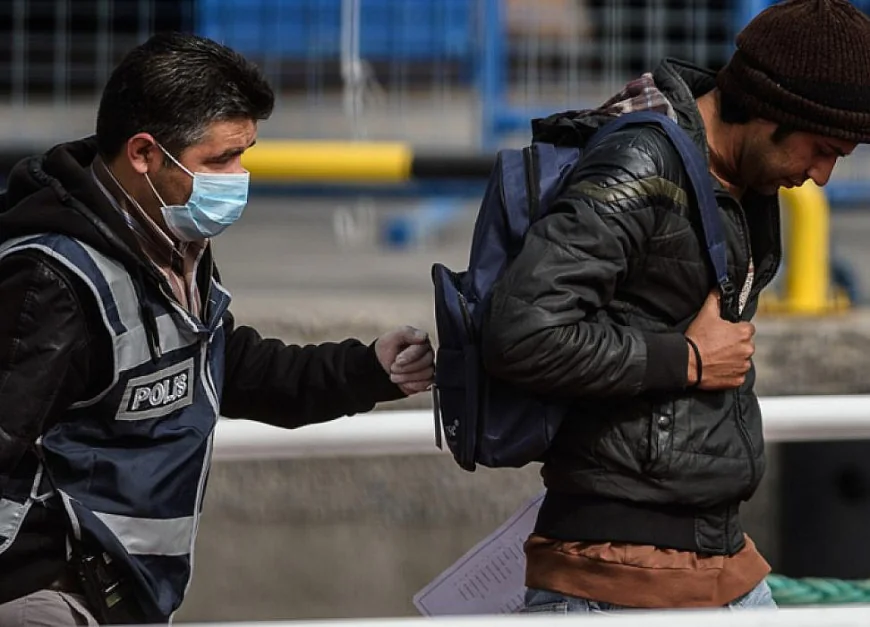
Territorial Recruitment Center officers conducting routine street patrols to verify the military registration documents of civilians. (Photo: Agency/Wise News Press)
The broader military recruitment drive
The strict handling of deportees reflects a much broader and increasingly aggressive military recruitment drive across Ukraine. As the military faces mounting casualties and intense pressure along the eastern and southern fronts, the need to replenish troop levels has become the government's paramount domestic priority.
Recent legislative changes to the national mobilization laws have drastically lowered the draft age, eliminated various medical and social exemptions, and granted sweeping new powers to the Territorial Recruitment Centers. The TCK officers are now a ubiquitous presence in Ukrainian cities, setting up checkpoints, patrolling public transport, and conducting unannounced document verifications in public spaces. The integration of border control with the TCK represents the final logistical step in ensuring that no eligible citizen, regardless of their international movement, falls outside the scope of the national mobilization apparatus.
Escalating tensions and street-level incidents
The aggressive enforcement of these mobilization laws has not occurred without significant domestic friction. The psychological toll of the prolonged war, combined with the omnipresence of recruitment patrols, has led to a sharp increase in street-level confrontations between civilians and state authorities.
A recent incident in the capital city of Kyiv starkly illustrates this escalating tension. According to widely circulated reports and video footage, a routine traffic stop conducted jointly by the national police and TCK officers quickly spiraled into violence. When the authorities attempted to verify the driver's military registration documents, the individual panicked and fled the scene in his vehicle. In response to the sudden evasion, the officers discharged their firearms, with several gunshots clearly audible in the recordings of the event.
While no fatalities were reported in that specific incident, it serves as a grim indicator of the high-stakes environment surrounding the draft. For Ukrainians facing deportation from the safety of the United States or Europe, the reality they are returning to is one of strict martial law, mandatory military service, and a highly volatile domestic atmosphere where draft evasion is met with immediate and forceful state intervention.
Tepkin Ne?
 Harika
0
Harika
0
 Kötü
0
Kötü
0
 Sevdim
0
Sevdim
0
 Komik
0
Komik
0
 Şaşırdım
0
Şaşırdım
0
 Üzücü
0
Üzücü
0
 Kızdım
0
Kızdım
0

Editör Masası| YerelGundem.com Türkiye ve küresel siyasetin ve uluslararası ilişkilerin nabzını tutan Yerel Gündem, Türkiye ve dünya gündemindeki en etkili ve alışılagelmişin dışındaki haberleri titiz bir veri doğrulama süreciyle raporlar. Entelektüel bir derinliğe sahip köşe yazılarımız ve stratejik öngörülerimizle, bilginin dürüstlükle buluştuğu noktada dünya siyasetine projektör tutuyoruz.













Yorumlar (0)